Home › Sitework and Structural Concrete
Superior Concrete Norfolk provides sitework and structural concrete in Norfolk, VA, including footings, walls, piers, pedestals, and equipment pads. We follow engineering specifications closely to deliver safe, long lasting structural elements. Support your projects with experienced structural concrete crews.
Superior Concrete Norfolk provides professional structural concrete throughout Norfolk, VA, Virginia and the surrounding area. Our licensed, insured crew delivers safe, clean, on-time work with a free estimate before anything begins. Call (757) 797-9232 or request your free quote.
Sitework and Structural Concrete for Norfolk Properties
Superior Concrete Norfolk provides full sitework and structural concrete services for residential, commercial, and light industrial projects throughout Norfolk, Virginia. Our team is familiar with local soil conditions, older crawlspace homes, and newer slab-on-grade construction, so we tailor each design and pour to the specific site instead of applying a one-size-fits-all approach.
When we talk about structural concrete, we mean the concrete that actually carries the load of your building or structure: foundations, footings, grade beams, structural slabs, retaining walls, and heavily loaded pads. Sitework supports that structural concrete by preparing the ground, controlling drainage, and shaping the property so that water moves away from the building instead of toward it.
From small additions in Ghent or Ocean View to multi-bay commercial pads near Military Highway, we manage the full process: site assessment, excavation, subgrade preparation, forming, reinforcement, placing and finishing, and curing. Our focus is long-term performance in Norfolk’s coastal climate, not just a surface that looks good the day it is poured.
Site Evaluation, Layout, and Drainage Planning
On a typical Norfolk project, the first critical step is a detailed site evaluation. We walk the property, review the survey or site plan, identify existing utilities, and look closely at drainage patterns. Much of Norfolk is flat and low lying, with high water tables in areas like East Ocean View and neighborhoods near the Lafayette River. That reality affects how deep we excavate, the type of base material we use, and how we manage groundwater during construction.
We verify property corners and proposed building locations against the survey, then mark excavation limits, footing lines, slab edges, and any thickened slab or grade beam sections. For additions to older homes, we examine the existing foundation, looking for settlement cracks, differential movement, and previous repairs, so the new structural concrete can be detailed to tie in without transferring old problems to new work.
Drainage planning is integrated from day one. We set finished floor elevations so that surrounding grades can slope away from the structure, design swales or drainage inlets if needed, and coordinate with any planned French drains or sump systems. For commercial sites, we also consider fire lane loads, truck traffic, and ADA accessibility so that the layout of pavements and slabs supports both structure and usability.
Excavation, Subgrade, and Base Preparation
Once layout is complete, Superior Concrete Norfolk performs controlled excavation to the depths specified in the plans or engineering documents. In Norfolk’s mixed soils, you can encounter everything from firm sandy subgrade to soft, organics-laden fill, especially in older neighborhoods where material was placed decades ago. We remove unsuitable material until we reach stable ground or an engineered bearing layer.
Subgrade preparation is one of the biggest cost and performance drivers in structural concrete. After rough excavation, we proof-roll or compact the subgrade with plate tampers or rollers to identify soft spots. Any pumping or yielding areas are undercut and replaced with compacted structural fill or crushed stone. In locations with higher groundwater, we may install temporary dewatering, use geotextile fabric under stone, or increase base thickness to prevent pumping and long-term settlement.
We then place and compact aggregate base, commonly a graded stone such as No. 57 over a layer of compacted crusher run, to achieve the specified thickness and density. For structural slabs like garage floors, equipment pads, and commercial slabs-on-grade, consistent base thickness is critical to prevent cracking and differential settlement. We check elevations using laser levels so that when the concrete is placed, it matches finished grades without surprise low spots.
Formwork, Reinforcement, and Structural Detailing
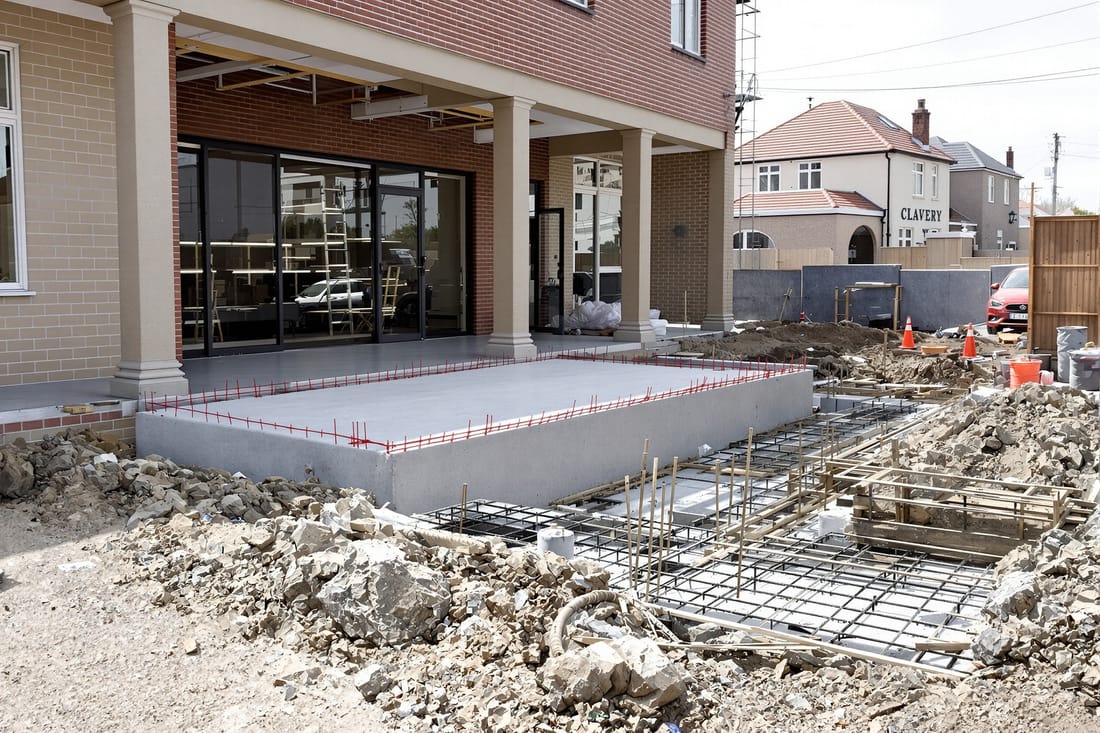
Formwork and reinforcement are where a structural concrete project moves from basic flatwork to true load-bearing construction. Our crews construct forms using steel or straight lumber, braced so they hold alignment under the pressure of the pour. For foundation walls and grade beams, we brace forms and use spreaders and ties to maintain correct width and plumb during placement.
Reinforcing steel (rebar) and welded wire reinforcement are installed per plans or as engineered. In Norfolk, typical residential footings might use #4 bars, with heavier bars and tighter spacing for multi-story or commercial loads. We support rebar on chairs to keep it at the correct depth and maintain required cover from soil and exterior surfaces, which is important for corrosion resistance in a humid, coastal environment.
At transitions between existing and new concrete, such as an addition tied to an older foundation, we often drill and epoxy dowels into the existing footing or wall. This detail helps the new structural concrete move with the old and reduces the risk of separation at the joint. For structural slabs that will carry point loads (such as columns, stair landings, or heavy machinery), we use thickened slab areas, additional reinforcing, or isolated pier footings underneath the slab to spread those loads properly into the soil.
Concrete Mixes, Placement, Finishing, and Curing
Superior Concrete Norfolk works closely with regional ready-mix suppliers to select the right concrete mix for each structural application. Factors we consider include required strength (typically 3,000 to 5,000 psi or higher for structural elements), exposure conditions near salt air and occasional tidal flooding, slump for workability, and any admixtures needed for set control or durability. For example, a retaining wall near brackish water may use a lower water-cement ratio and corrosion-resistant rebar to extend service life.
During placement, we manage truck sequencing so concrete arrives within workable timeframes, especially in summer heat or when a cold front is moving through. We place concrete using chutes, buggies, or pumps depending on access. Vibration is applied to walls, columns, and heavily reinforced areas to consolidate the mix, eliminate voids, and ensure full contact with rebar and forms.
Finishing is matched to use. Structural slabs that will receive tile, epoxy, or machinery are finished to tighter flatness tolerances, while exterior structural pads may receive a broom finish for slip resistance. After finishing, proper curing is non-negotiable. We use curing compounds, wet curing, or coverings to retain moisture and mitigate rapid drying from sun and wind coming off the water. In cooler months, we may use insulated blankets or cold-weather admixtures to ensure the concrete reaches design strength without freeze damage.
Common Issues in Norfolk and How We Address Them
Norfolk presents a few recurring challenges for sitework and structural concrete: high water tables, soft or variable fill, and the effect of moisture and salt-laden air on foundations over time. Superior Concrete Norfolk has developed standard practices to deal with these conditions and extend the service life of your structure.
For high groundwater, we often schedule excavation and footings during windows when tides and recent rainfall make conditions most manageable, then install temporary sumps and pumps as needed. In some cases we raise footing elevations and use step footings or grade beams that span over weaker or wetter zones while still meeting code-required frost depth and bearing capacity.
On sites with questionable historic fill, we recommend geotechnical evaluation for larger or more critical structures. With proper soil data, we can design wider footings, deeper bearing, or use engineered fill and compaction specs that reduce settlement risk. Where existing structures already show settlement, we carefully evaluate whether underpinning or additional structural measures are warranted before tying in new work.
To combat moisture and chloride exposure, particularly in neighborhoods close to the Elizabeth River or the Chesapeake Bay, we prioritize adequate concrete cover over rebar, good drainage grading around the structure, and the use of quality vapor barriers under interior slabs. These steps significantly reduce corrosion potential and moisture transmission into basements, crawlspaces, or interior floors.
Project Planning, Pricing Factors, and Why Choose Us
The cost and schedule for sitework and structural concrete in Norfolk depend on several specific factors: soil conditions discovered during excavation, required concrete strength and volume, complexity of reinforcement, site access for trucks and equipment, and weather or groundwater management needs. A straightforward residential addition footer on firm soil will be less involved than a multi-column commercial slab with heavy point loads and limited access.
During our estimating process, Superior Concrete Norfolk itemizes excavation, base preparation, formwork, reinforcement, concrete, and finishing, so you can see where the main cost drivers are. We also discuss options such as thicker slabs versus increased rebar, different base thicknesses, and possible drainage upgrades that may add modest upfront cost but significantly increase durability and performance.
We coordinate with your architect, engineer, and local building officials to ensure that designs meet Virginia code and local inspection requirements. Our crews are used to Norfolk’s permitting process and inspection schedules, which helps reduce delays. Most importantly, we treat structural concrete as the backbone of your project. A well designed and correctly built foundation and structural slab protect every other investment you make in the building. If you are planning a new structure, addition, or major renovation in Norfolk, we can walk your site, review your plans, and provide a clear structural concrete scope that fits your budget and long-term goals.